The thickest film isn’t automatically the right choice for a pallet. Pallet stretch wrap film is stretched around a load to hold it together, and pallet wrap can extend to 200-300% of its static length before contracting to grip the load. The suitable choice depends on the load, wrapping method and handling conditions.
It’s understandable to focus first on keeping goods secure in transit. Film format and material content also affect how a load is wrapped and what happens to the packaging after use. Recycled-content film adds another factor to consider.
This guide explains what pallet wrap is and how hand, machine, mini and spiral formats differ. It also covers recycled-content film, the difference between stretch and shrink wrap, and the factors to consider when matching film to a load and wrapping operation.
Key Takeaways
- Match film thickness to the pallet’s weight, shape and handling conditions rather than choosing by thickness alone.
- Choose between hand, machine, mini and spiral formats by considering the wrapping task and the flow of your operation.
- Understand how stretch and shrink wrap work differently before selecting a method to secure goods for transit.
- Assess recycled-content film alongside film type and end-of-use considerations when selecting pallet wrap.
When should I use a stretch wrap machine instead of wrapping by hand?
A machine becomes worth considering as wrapping volumes rise and it becomes harder to apply film consistently by hand. Choose film thickness to suit the load’s weight, shape and handling conditions.
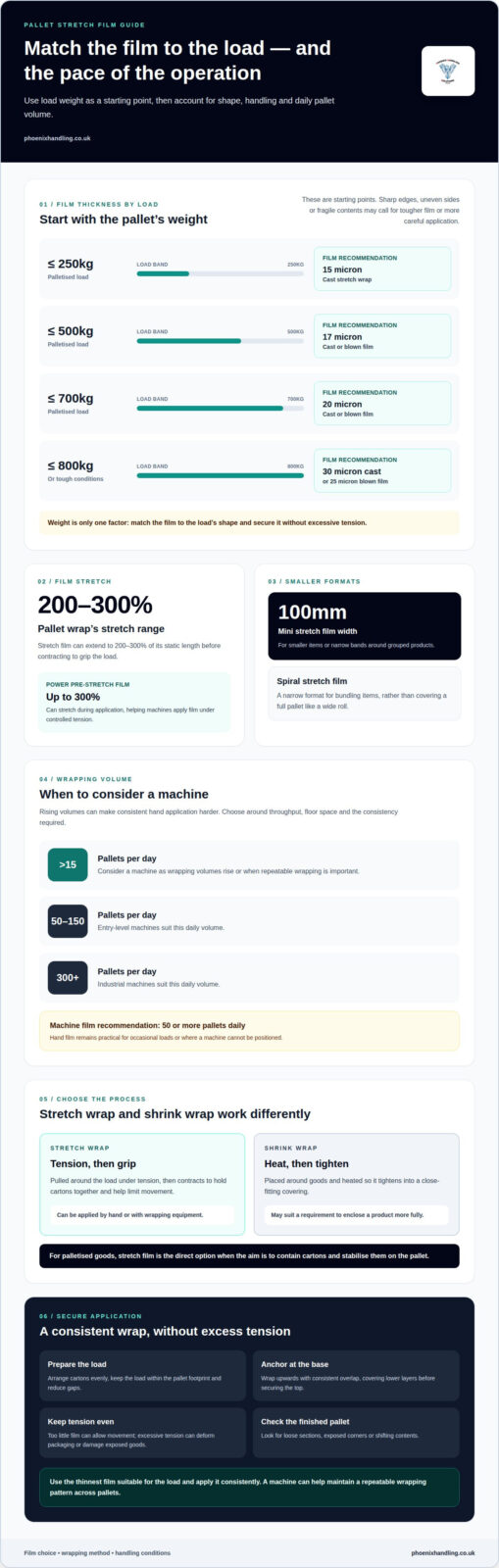
For palletised loads up to 250kg, use 15 micron cast stretch wrap. Loads up to 500kg suit 17 micron cast or blown film. For loads up to 700kg, use 20 micron cast or blown film. Loads up to 800kg, or tough conditions, suit 30 micron cast or 25 micron blown film.
Weight is only one factor. Loads with sharp edges, uneven sides or fragile contents may need tougher film or more careful application. Match the film to the load’s shape so it holds items securely without excessive tension.
Consider a machine for operations wrapping more than 15 pallets per day. Entry-level machines suit 50-150 pallets per day, while industrial machines suit 300 or more. Machine film is recommended for high-volume operations wrapping 50 or more pallets daily.
Film Cost and Pallet Length
UK film costs depend on the type, thickness and roll dimensions, as well as order requirements; prices are provided after a quote request. The length needed per pallet depends on pallet size, load height, overlap and the number of wraps. A tall or irregular load needs a different amount from a compact, even stack.
Reducing Film Use and Load Damage
Use the thinnest film suitable for the load and apply it consistently. Too little film can allow movement, while excessive tension can deform packaging or damage exposed goods. Align cartons, contain overhang and wrap the base as well as the upper load. A machine can help maintain a repeatable wrapping pattern across pallets.
Hand, machine, mini and spiral stretch wrap
The application method affects how film is handled, the consistency of the wrap and the pace of production. Choose a format that suits the load and the number of pallets moving through the operation.
Choosing an Application Method
Hand application suits lower-volume work and varied pallet shapes, where operators can adjust the wrap as they go. Consider a machine when daily volume exceeds 15 pallets, or when repeatable wrapping is important. Machine film is recommended for high-volume operations wrapping 50 or more pallets daily. Entry-level machines suit 50-150 pallets per day; industrial machines suit 300 or more.
Machine wrapping also reduces the need for an operator to walk repeatedly around each load. The right choice depends on throughput, available floor space and the consistency required. A hand-held roll remains practical for occasional loads or areas where a machine cannot be positioned.
Available Pallet Film Types
Hand film is applied directly by an operator, while machine film is designed for use with wrapping equipment. Mini stretch film rolls are 100 mm wide, making them suitable for securing smaller items or applying narrow bands around grouped products. Spiral stretch film provides a narrow wrapping format for bundling items, rather than covering a full pallet in the same way as a wide roll.
Power pre-stretch film can stretch up to 300% during application. This allows film to extend before it reaches the load, helping machines apply it under controlled tension. Match the roll format and film behaviour to the equipment, load dimensions and wrapping pattern.
Secure Pallet Wrapping
Arrange cartons evenly, keep the load within the pallet footprint and reduce gaps between items. Anchor the film at the base, then wrap upwards with consistent overlap, covering the lower layers before securing the top. Keep tension even so the film holds the goods without crushing cartons or distorting unstable items.
For machine applications, set the wrapping pattern to suit the load’s height and shape. Review the finished pallet for loose sections, exposed corners or shifting contents. A suitable pallet wrapping system can support a repeatable process across changing loads.
Stretch wrap versus shrink wrap
Stretch wrap and shrink wrap secure goods in different ways. Stretch film is pulled around a load under tension, then contracts to grip it. Shrink film is placed around goods and heated so it tightens.
Pallet wrap can stretch to 200-300% of its static length during application before contracting around the load. The film’s tension holds cartons together and helps limit movement during handling and transit. It can be applied by hand or with wrapping equipment, making it suitable for pallet loads that need restraint without a heat-shrinking process.
Shrink wrap uses heat to create a close-fitting covering. It can enclose a product or group of goods, which may be useful when the packaging needs to cover more than the pallet’s sides. The heating step makes this process different from applying stretch film. Consider the product, required coverage and available equipment before choosing.
For a palletised load, stretch film is generally the direct option when the main aim is to contain cartons and stabilise them on a pallet. The film can be wrapped around the base and load, with the pattern adjusted to the goods’ shape and stability. Shrink wrapping may suit a different requirement, such as enclosing a product more fully rather than simply binding a pallet load.
Do not treat the terms as interchangeable when specifying packaging. B&Q describes shrink wrap, also known as stretch wrap, as packaging used in warehouses and house moves to secure and protect goods during transit. In operational use, however, the difference between tensioned stretch film and heat-shrunk film matters when choosing a process. Match the method to the load, required coverage and wrapping process, then check that the finished packaging contains the goods without obstructing handling.
What types of pallet stretch film are available in the UK?
UK pallet operations can choose between cast, blown, pre-stretched and recycled-content films. Cast and blown refer to different manufacturing methods, while pre-stretch describes film supplied already extended. Recycled content is a separate material characteristic, not a film-making method, with circular polymer producers such as Healix contributing to the supply of recycled plastic feedstocks. When selecting pallet stretch wrap film, consider how it will be applied, the load’s handling conditions and the intended end-of-use route.
Blown pallet wrap can be used in cold conditions as low as -30°C, which can suit chilled environments. Pre-stretched blown film can use up to 50% less film per pallet than standard hand wrap. This may be relevant when reducing film consumption is a priority, but the specification still needs to provide appropriate load containment. Compare the film’s performance with the shape and stability of the goods.
Roll formats also vary. Extended-core pallet wrap has cardboard cores that extend 65 mm from the film edge, providing a grip for hand application without a separate dispenser. Machine rolls are designed for equipment, while narrower spiral stretch film suits bundling or securing selected parts of a load. Match the core and roll format to the dispenser or machine, as well as the wrapping pattern used in the operation.
Recycled-content film should be considered separately from whether used film can be reprocessed. According to the UK Government, flexible plastic film must contain at least 80% polyethylene, polypropylene, or both by weight to be considered for reprocessing under the UK assessment methodology. This threshold concerns the material composition for reprocessing, not the recycled content of a new roll. Keep those specifications distinct when choosing pallet stretch wrap film.
Compare available film types against the load, application method and end-of-use route. Explore film options to identify a specification suited to your operation.
Phoenix Handling Solutions Limited: Pallet Wrapping Machines
Phoenix Handling Solutions Limited supplies Pallet Wrapping Machines for operations that apply stretch film to palletised loads. The right system depends on load dimensions, film format, wrapping pattern and packaging-line pace. Matching these requirements helps integrate pallet wrapping with the wider production or dispatch process.
Where packaging needs go beyond film wrapping, Strapping Machines and Stretch Hooders offer other ways to secure or cover pallet loads. A Bag Palletiser can also support operations handling bagged products before packaging. These options suit different stages and requirements, so base the choice on the materials handled and the intended process.
Put the specification into practice
The most useful specification works across the loads and packaging processes your operation handles. Treat film, application method and the wider line as connected decisions rather than choosing a roll in isolation. For industrial facilities sourcing supplies across their manufacturing workflow, Opensupply BV supplies products to processing industries to support efficient, dependable handling. This gives your team a clearer basis for assessing whether the current approach remains suitable as products, packaging or production requirements change.
Before choosing pallet stretch wrap film, bring together the practical details that shape the decision: load dimensions, product type, wrapping method and the protection required during handling. These points help focus a discussion on how pallet packaging fits your operation.
Phoenix Handling Solutions Limited can discuss the equipment options relevant to your packaging process. Contact Phoenix Handling Solutions Limited to take the next step and discuss your requirements. A clear starting point can help turn the specification into a practical decision for your operation.
Frequently Asked Questions
What is pallet wrap?
Pallet wrap is a flexible film used to hold goods together on a pallet. Pallet stretch wrap film is applied around the load to keep packaged items grouped during storage and handling. For example, wrapping a stack of cartons can help keep the cases together as one handling unit. Apply the film to contain the load without covering the pallet openings needed for lifting.
What is the difference between cast and blown stretch wrap?
Cast and blown stretch wrap are made using different production processes, which affect how the films behave during use. The practical choice depends on the wrapping equipment, load and handling environment. For instance, blown pallet wrap can be used in cold conditions as low as -30°C. Consider whether the film’s performance suits the operating temperature and application method, as well as the shape and stability of the pallet load.
What is pallet wrap used for?
Pallet wrap contains packaged goods on a pallet for storage or transport. It can group cartons, bags or other products into a single handling unit, helping limit movement between items. For a mixed pallet, the wrapping pattern needs to hold different layers together without obscuring labels or obstructing handling. Choose the film and method to suit the goods and their route through the operation.
How thick should stretch film be for different loads?
Use load weight as a starting point: 15 micron cast film suits loads up to 250kg; 17 micron cast or blown film suits loads up to 500kg; and 20 micron cast or blown film suits loads up to 700kg. Loads up to 800kg, or tough conditions, suit 30 micron cast or 25 micron blown film. Sharp corners and uneven shapes also affect film choice.
Hand stretch film vs machine stretch film: which is best?
Hand film suits lower-volume work, mixed pallet shapes and areas where a machine cannot be positioned. Machine film is designed for wrapping equipment and a consistent application pattern. For example, a dispatch area handling varied consignments may benefit from manual flexibility, while a regular packaging line may favour machine application. Base the decision on throughput, available floor space, load variation and the wrapping process.
How do I choose stretch film for heavy, unstable or irregular loads?
Assess the load’s weight, shape, packaging and handling conditions together. Heavy goods may need thicker film, while protruding corners and uneven layers can put extra stress on the wrap. Keep cartons within the pallet footprint and minimise unsupported overhang. For an unstable stack, choose pallet stretch wrap film and an application pattern that contain the lower layers without distorting the packaging.