
Packaging waste is not the only emissions lever on a packing line. Reducing carbon footprint with packaging automation starts with measuring material use, product damage and manual handling, then assessing how machine settings affect each. Automated packaging machines can reduce stretch-film consumption by 30-50%, although the opportunity depends on the load and wrapping requirements.
It’s understandable to focus on how much packaging is used: excess film, tape or protective material can consume resources unnecessarily. But reducing material alone is not enough if products are damaged in transit or equipment uses energy inefficiently.
This article explains how to assess material use, damage rates and handling, and how programmed machinery can improve packaging consistency. It also covers cycle time, uptime and energy per pallet as operating measures, helping you identify changes that may reduce emissions without compromising load stability or product protection.
Key Takeaways
- Track packaging consumption, product damage and manual handling to identify where emissions reductions may be possible.
- Review programmed film tension, wrapping cycles and tape application to control material use without compromising load security.
- Use cycle time, uptime and energy per pallet to assess how efficiently packaging equipment operates.
- Match machinery to the workload and maintain it regularly to limit unnecessary energy and material use.
Reviewing material use, damage rates and manual handling
Start by establishing a baseline for each packaging process. Record material supplied, material consumed and finished packs produced. Track film, tape, cartons and protective materials separately so you can trace changes in consumption to a specific operation. For example, compare the film issued to a pallet-wrapping station with the film used on completed, stable loads. This can reveal waste hidden by a single site-wide total.
Include damage in the same review. Each damaged product adds an average of 18.3 kg of carbon dioxide emissions to the atmosphere, so record damage by product type, packaging format and dispatch route. Check whether a crushed carton, loose pallet or failed strap contributed to the loss. Consistent packaging can reduce avoidable variation, but the pack must still protect the product through handling and transport.
UK businesses should assess packaging producer-responsibility and packaging-waste requirements according to their role in the supply chain. Duties depend on activities such as manufacturing, importing, filling or supplying packaging, so identify each relevant activity and material before changing specifications.
If you are considering grants or incentives, define the proposed equipment change and its measurable energy or material reduction first. Then review public business-support programmes for the relevant UK nation and local area, checking eligibility against the project, sector and business location. A clear baseline makes an application more specific than a general claim about efficiency.
Assess handling alongside material consumption. Note repetitive lifting, manual wrapping and carton forming, then identify where a process creates unnecessary movement or inconsistent application. For instance, compare the handling steps for a manually wrapped pallet with those for a mechanically wrapped load. This helps distinguish material savings from changes that mainly reduce manual intervention.
Assess recycled content and recyclability as separate properties. Recycled content describes material that has already been recovered and reused; recyclability concerns whether packaging can be processed again after use. Record both for each packaging format, including whether mixed materials or protective layers complicate separation. This gives operations teams a practical basis for improving material efficiency without assuming every recyclable option suits the product or supply chain.
Reducing tape and film use through programmed machinery
Programmed packaging machines apply repeatable settings, helping operations control material usage across similar loads. Automated packaging machines can reduce stretch-film consumption by 30-50%. The result depends on pallet dimensions, load stability, film specification and the containment required during logistics.
For pallet wrapping, set film tension and rotation cycles to suit the load instead of applying the same pattern to every pallet. A stable, uniform load may need a different wrap profile from one with uneven edges or mixed case sizes. Review film use alongside load security so lower consumption does not compromise protection.
Pre-stretch technology extends film before application, allowing a roll to cover more load area. Pre-stretch systems can achieve film savings of up to 250-300%. This figure describes potential savings, not a result for every operation. Film properties, machine settings and pallet geometry affect the outcome, so assess the material used per wrapped pallet under normal production conditions.
Shrink wrapping is another option. A shrink wrapping machine applies film around a product or pack, then uses heat to form it to the required size. Matching the film dimensions to the product helps avoid excess material around smaller items. The packaging must still protect the product and suit the handling process.
Tape use can also be controlled during case sealing. Machines that apply tape in preset lengths and at consistent pressure can reduce excess application compared with variable manual sealing. Set the tape pattern to close the carton securely, then monitor usage and rejected packs to identify unnecessary application or poor sealing.
For a practical review, compare film or tape consumed per completed load or carton before and after changing a setting. Record damaged or unstable loads alongside material use, then adjust one machine parameter at a time. Pallet wrapping machines use programmed tension and rotation cycles to apply film according to the load’s containment needs.
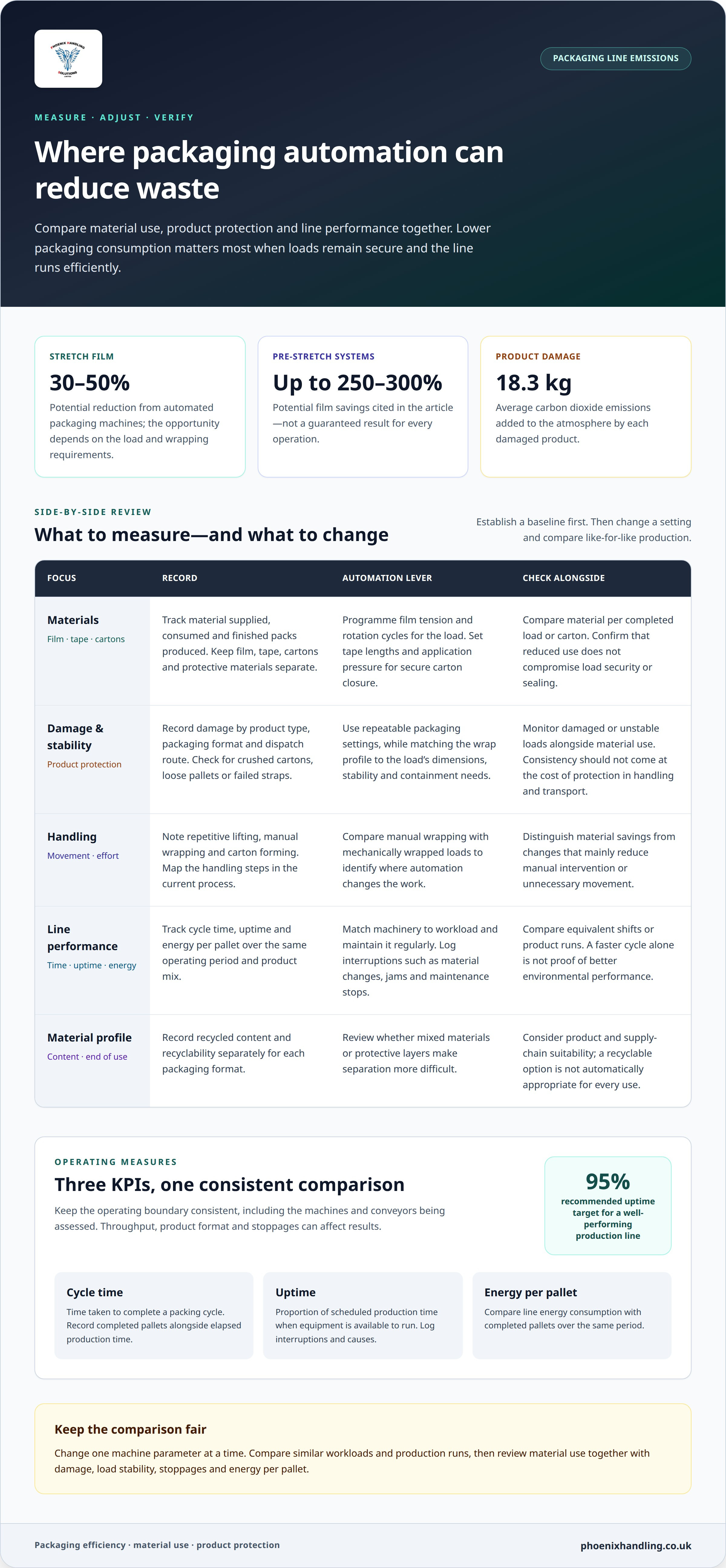
Cycle time, uptime and energy-per-pallet KPIs
Cycle time, uptime and energy per pallet show how a packaging line performs against its output requirements. Track all three over the same operating period and product mix. A faster cycle alone does not demonstrate better environmental performance if stoppages, rework or higher energy consumption increase the impact per finished pallet.
Cycle time measures how long the line takes to complete a packing cycle. Record completed pallets alongside elapsed production time, then compare equivalent shifts or product runs. For example, faster pallet handling may not improve overall performance if downstream equipment cannot maintain the same flow.
Uptime records the proportion of scheduled production time when equipment is available to run. Log interruptions and their causes, such as material changes, jams or maintenance stops. A reliability target of 95% is recommended for a well-performing production line, but uptime alone does not show the amount of energy used per pallet.
Measure energy per pallet by comparing line energy consumption with completed pallets over the same period. Keep the operating boundary consistent, including the machines and conveyors being assessed. Compare similar workloads, since product format, throughput and stoppages can affect the result. This helps distinguish genuine efficiency gains from a temporary change in production volume.
IoT devices and sensors can support real-time monitoring and adjustments to resource use. For example, sensor data can help identify idle running or irregular performance. Use the readings to investigate where settings or operating patterns could be adjusted, then compare the same KPIs afterwards.
Review all three measures before changing a process. If cycle time improves but uptime falls, the line may not produce more finished pallets over a full shift. If energy per pallet rises, examine stoppages, idle operation and workload before attributing the change to a machine setting. Looking at the measures together gives operations teams a sounder basis for decisions aimed at lower-emission packing.
Packaging and emissions reduction
Packaging automation can reduce resource use when equipment, materials and workload are matched. Assess the whole process, including energy consumption, packaging use and product protection.
Emissions and Cost Comparisons
To compare automated and manual packaging, assess energy, material use, labour and product protection at equivalent output. A faster process may use more energy or packaging if settings are poorly matched to the load. Measure the same product mix and pallet requirements for both methods. Include maintenance, material waste, energy consumption and labour time to make the operating-cost comparison useful.
Measuring Packaging Automation’s Carbon Footprint
To measure a packaging system’s carbon footprint, track its energy and material inputs against completed output. Record machine energy, packaging consumed and pallets or packs completed over the same production period. Include rejected packaging and product damage where records allow. Compare equivalent products and workloads, then review the figures after process changes to assess progress towards sustainability goals.
Choosing and Implementing Lower-carbon Automation
Lower-carbon automation starts with equipment specified for the workload and packaging requirements. Correct sizing matters: oversized or undersized machines can waste resources or fail to meet production needs. Match the system to product dimensions, throughput and protection requirements. Where suitable, bagging can replace boxes and void-fill, reducing pack weight. A bagger with a built-in printer can also remove the need for separate labels. Planned maintenance can help minimise energy use and material consumption.
Risks and Limitations for Emissions Reduction
Automation reduces emissions only when its operation and packaging choices avoid unnecessary resource use. Poorly matched equipment, excess packaging or weak maintenance can undermine sustainability goals. Energy savings of up to 25% through regenerative braking are possible, but depend on the equipment. Packaging changes can also affect product protection, so assess damage and packaging performance alongside energy. For packaging processes that need review, discuss lower-carbon automation options.
Phoenix Handling Solutions Limited: Pick & Pack De Palletisers
Phoenix Handling Solutions supplies Pick & Pack De Palletisers for operations assessing automated product handling within their packaging processes. These systems may be relevant where manual picking and pallet preparation form part of an emissions review, alongside packaging-material and energy-use measures.
For finished pallet loads, Pallet Wrapping Machines and Strapping Machines provide containment through automated processes, while Stretch Hooders use hood film. The right system depends on the product, load configuration, throughput and protection requirements. Assessing these factors alongside material consumption and energy per pallet helps connect equipment selection to practical sustainability objectives.
To discuss packaging automation for your operation, contact Phoenix Handling Solutions Limited.
Turn emissions priorities into an equipment plan
Use your assessment to guide the next packaging decision rather than treating emissions as a separate project. Define the operational requirements first, including the products handled, line configuration and protection needed. Then consider sustainability criteria alongside throughput and integration requirements when specifying equipment. This provides a practical starting point for reducing carbon footprint with packaging automation.
It also gives operations and procurement teams a shared basis for evaluating changes and reviewing their effects over time. Keep reducing carbon footprint with packaging automation connected to production needs by selecting equipment that fits the workload, rather than treating emissions as a standalone target. Phoenix Handling Solutions offers Pallet Wrapping Machines, Strapping Machines and Stretch Hooders for operations with different load and containment requirements.
A considered equipment review can help turn emissions priorities into clear decisions for your site. Contact Phoenix Handling Solutions Limited to discuss your packaging requirements.
Frequently Asked Questions
How can packaging automation reduce a company’s carbon footprint?
Packaging automation can lower a company’s emissions by controlling material use, preventing avoidable damage and reducing energy per saleable pack. For example, a line handling several carton sizes can use product-specific settings instead of applying an excessive wrap or seal pattern to every pack. The carbon benefit depends on the whole operation, including equipment electricity, packaging inputs and rejected products, not simply machine speed.
What carbon emissions savings can automated packaging deliver?
There is no single emissions-saving figure that applies to every packaging line. Estimate results by comparing manual and automated production for the same product mix and saleable output, including electricity, packaging material and waste from rejected or damaged goods. Use consistent operating boundaries and current emissions factors for each input. This gives you a site-specific comparison instead of treating a machine’s material saving as the total carbon reduction.
How can automation reduce packaging material use and packaging waste?
Automation can reduce packaging waste by applying repeatable pack formats and helping identify recurring causes of rejects. For example, a carton former can produce consistent boxes, while line records can reveal whether damaged cartons result from poor forming, sealing or downstream handling. Separate clean cardboard, film and mixed packaging after use where site arrangements allow, then use waste records to guide material and process changes.
What packaging automation technologies are most energy efficient?
No single technology is most efficient for every product or line. The relevant measure is energy used to deliver the required, protected output. Compare equipment under the actual workload, including start-stop operation, idle periods and product changeovers. A pallet wrapping machine may suit stable pallet loads, while a stretch hooder may meet other containment needs. Select equipment based on measured energy and material performance, not machine category alone.