Correct strap and stretch-film loading is part of a changeover, not a minor finishing task. Effective operator training for automated packaging lines covers safe machine operation, material loading, format changes, routine checks, quality verification and fault escalation. Operators also need practical instruction on selecting the correct settings and confirming that the finished pack meets the production requirements.
Changeovers can cause delays or incorrect packs if operators miss a setup step, use the wrong material or continue running after an abnormality. Training should combine clear work instructions with supervised practice on the equipment and formats used in production.
This guide explains what packaging machinery training covers, how operator and maintenance responsibilities differ, and how to teach changeovers and material loading. It also outlines practical ways to practise each sequence, assess competence and keep handover records useful as products, formats or equipment change.
Key Takeaways
- Match training to the equipment: a standalone machine and an integrated line require different operating and fault-response skills.
- Use clear SOPs and handover records to show which tasks have been practised, who is responsible and what needs follow-up.
- Teach changeovers in sequence, from checking the product and format to removing old materials and approving the first new pack.
- Practise correct strap and stretch-film loading, then confirm the machine is set up for the load before production continues.
What Does Your Packaging Machinery Training Cover?
Training should match the machine, its role in production and each operator’s authorised tasks. Assess standalone equipment separately from integrated lines, where a stop or setting on one machine can affect downstream handling.
-
Assess Training Needs and Machine Setup
Audit each machine against the tasks operators perform, including start-up, production monitoring, cleaning and routine checks. A standalone wrapping machine needs equipment-specific instruction. An integrated line also requires operators to understand product flow between stations and recognise how a stoppage affects the process. Use the final machine configuration and current support documents during instruction, not an outdated layout.
Set a consistent shift-start sequence: check the production order, confirm the product and format, inspect safety devices, then follow the approved start-up procedure. Cover the correct mode and recipe, as well as handling, sealing or wrapping settings where relevant. Operators should not adjust parameters outside their training and authorisation.
-
Document Machine Settings for Operators
Record approved settings against each product and packaging format, using the final configuration and applicable machine instructions as references. Include the selected recipe, relevant parameters and checks that confirm the machine is ready to run. Clear records help operators repeat the setup across shifts and spot when a setting does not match the job.
Keep operating instructions, cleaning steps, routine checks and support information accessible at the machine. Train operators to use the HMI to check production status, quantities and alarm messages, and to report recurring faults. Document the tasks covered, participants, questions raised and follow-up actions. Record demonstrated tasks separately from the organisation’s competence or authorisation decision.
-
Identify Training Requirements and Outcomes
Set training outcomes for safe start-up and shutdown, mode selection, quality checks, changeovers and routine maintenance tasks. UK instruction should cover emergency-stop locations, safeguarded areas, safe access and approved shutdown procedures, alongside the manufacturer’s instructions and workplace procedures. Operators should identify abnormal conditions and escalate work beyond their authorised tasks, not attempt unauthorised repairs.
Training for a fully automated packaging line may take one to two weeks. There is no globally mandatory certification for packaging machine operators. Assess competence by observing operators complete their assigned tasks correctly before independent work, including setup, fault recognition and quality checks. Inadequate training can leave operators unsure how to respond to alarms, increasing the risk of unsafe intervention, incorrect packs or recurring downtime.
Do You Provide Operator and Maintenance Training?
Operator training for automated packaging lines should distinguish production tasks from maintenance responsibilities. Compare in-house and external training by checking whether each approach covers your machinery, work instructions and practical task assessment. The right format depends on who can deliver equipment-specific instruction and how operators will practise on the production line.
- Keep training records alongside current SOPs and maintenance documents. Record the tasks covered, participants, questions raised and follow-up actions. Note demonstrated tasks separately from any wider competence or authorisation decision. These records help supervisors identify which operators need instruction for a particular machine or production task, especially when responsibilities differ between shifts.
- Train operators to complete routine checks and first-line actions within their authorised role. Use practical examples, such as debris near a sensor, a damaged part, conveyor irregularities or recurring alarms. Operators can report these observations and keep the workstation orderly. Routine inspection helps identify developing issues, but it does not replace maintenance by qualified personnel.
- Include the approved isolation procedure before cleaning or maintenance. Training should cover disconnecting power and air supplies, then releasing residual pressure, heat and mechanical tension. Use machine instructions and site procedures to define permitted operator tasks. Electrical, mechanical, pneumatic and robotic repairs require proper authorisation and training. Operators should escalate work beyond their assigned competence.
- Set a clear route for handing faults from operators to maintenance or technical staff. Ask operators to record alarm messages, symptoms, production effects and actions already taken. This gives maintenance useful context for investigation. Operator training for automated packaging lines can practise this handover using a simulated fault report and a review of the details passed between shifts. Compare training approaches by their practical fit: each should include supervised tasks on relevant equipment, clear learning outcomes and records of unresolved questions.
Product and format changeovers
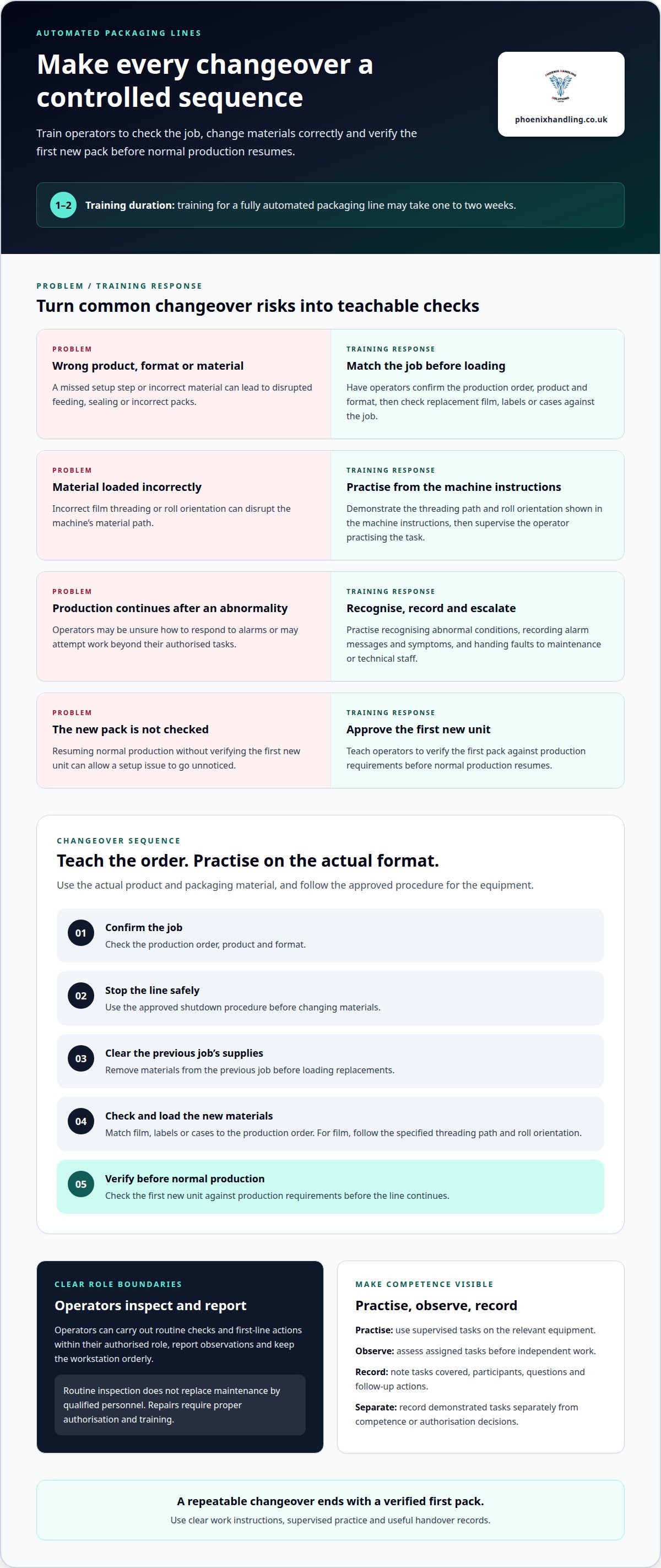
Teach each changeover as a controlled sequence, using the actual product, packaging material and format. Operators should follow approved procedures and verify the first new unit before normal production resumes.
-
Load Materials for Changeovers
Train operators to stop the packaging line using its approved shutdown procedure before changing materials. They should remove supplies from the previous job, then check replacement film, labels or cases against the production order. For film loading, demonstrate the threading path and roll orientation shown in the machine instructions. Incorrect threading or material selection can disrupt feeding, sealing or print alignment.
- Practise the full format sequence with the products and pack types operators will handle. Select the correct recipe, fit the specified tooling where applicable, and check product and case placement before a controlled trial. For a label change, clear old labels and verify the first new unit’s product, variant, batch and required information against its contents.
- Use the trial to check feeding, closing and labelling before releasing the line for normal production. Misalignment or an incorrect setting can cause leaks, damage or unreadable codes. Operators should complete the required first-piece check and report any abnormality during the changeover. Record the format run and any issue against the production task.
-
Refresh Training After Process or Equipment Changes
Review instruction when products, formats, machinery, software functions, safety procedures or production personnel change. Practise the revised sequence with the actual materials and format, rather than relying only on an earlier handover. Repeat relevant checks if shift patterns or output targets change, or if performance drifts from the established procedure. Record updated tasks and any follow-up needed.
Correct strap and stretch-film loading
Train each packaging machine operator to load the specified material in line with the manufacturer’s instructions. Correct routing and inspection before running can prevent faults that cause downtime.
- Identify the approved strap type and reel for the production task. Before loading a strapping machine, follow its instructions for reel orientation and strap routing through guides and feed rollers. Check the path for twists, damage or obstructions. Keep hands clear of moving parts and use only the machine’s approved loading procedure.
- Practise feeding strap through the machine’s specified path, then check its position at the sealing or joining point. Use the approved controls to test feed and tension. Inspect the first strapped load for secure, consistent placement and a sound joint. If the strap slips, jams or seals incorrectly, stop and follow the fault procedure.
- For stretch film, check the roll type and orientation against the wrapping machine instructions. Practise fitting the roll and threading film through the specified rollers and carriage path. Confirm the film feeds freely, without folds or damage, before a controlled test. Check the wrapped load for coverage, stability and tears, using the site’s acceptance criteria.
- Teach operators to distinguish a loading fault from a mechanical fault. A wrongly routed strap or film roll may cause poor feeding, uneven application or repeated stops. Operators should stop the machine if material breaks, jams or behaves abnormally, then report the condition rather than repeatedly resetting it. Record material and fault details to support maintenance diagnosis.
- Use supervised practice on the actual packaging machine, followed by an observed loading task. The operator should identify the correct material, follow the manufacturer’s route, complete the required inspection and produce an acceptable test pack. For equipment selection that fits your wrapping or strapping process, discuss packaging machine options.
Phoenix Handling Solutions Limited: Pick & Pack De Palletisers
Phoenix Handling Solutions Limited supplies Pick & Pack De Palletisers for operations handling products from palletised loads. They can form part of a wider packaging arrangement alongside Automated Guided Vehicles, Pallet Wrapping Machines or Strapping Machines. Consider this equipment when reviewing how products move between pallet handling and downstream packing, wrapping or strapping. The right configuration depends on the products, pack formats and production flow. Training should reflect the installed equipment and operators’ tasks, including normal operation, material loading and fault escalation. Clear responsibilities help operators understand where their role ends and maintenance support begins. To discuss packaging and pallet-handling equipment for your operation, contact Phoenix Handling Solutions Limited.
Build changeover capability into the next production plan
Use the next product or format change to strengthen operator training for automated packaging lines. Review where operators need clearer instructions, supervised practice or a defined escalation route, then add those points to the relevant work procedures. This keeps training connected to production demands instead of treating it as a one-off handover.
For packaging-line projects that also involve end-of-line equipment, Phoenix Handling Solutions Limited supplies Pallet Wrapping Machines, Strapping Machines and Stretch Hooders. Matching equipment to the load, packaging materials and production flow helps define the operating tasks that training needs to cover.
Discuss the equipment and material-handling requirements for your operation with Phoenix Handling Solutions Limited. A clear starting point is the product, format and changeover process your operators need to manage. With those details in view, you can plan the next steps with greater confidence.
Frequently Asked Questions
Do You Offer Refresher Training for Existing Operators?
Operator training is included with machinery installation and commissioning. For existing operators, refresher training may be needed after a change to the product range, production process or equipment. Identify which tasks have changed, then arrange practical instruction around those operations. Observe operators completing the revised work and record any remaining training needs before they take on the changed task independently.
How Does Machine Training Help Reduce Downtime?
Machine training helps operators recognise process interruptions early and respond within their authorised tasks. For example, an operator who understands the difference between a material-feed issue and a recurring machine alarm can give technical staff more useful details. This helps maintenance investigate the likely cause, rather than relying on repeated resets that may interrupt production without resolving the fault.
Is Training Available After Machinery Installation?
Operator training is included as part of machinery installation and commissioning. Operators can learn the equipment in its installed production setting, rather than relying solely on general instructions. Training can cover the machine’s role in the line and the tasks assigned to each operator. Phoenix Handling Solutions Limited supplies both standalone machinery and integrated systems for manufacturers.
What Skills Should Operators Learn for Automated Packaging Lines?
Operators need practical skills in production monitoring, format handling, quality checks and clear communication across shifts. They should recognise whether a finished pack matches the product and packaging requirements, and know how to report an abnormal condition. On an integrated line, operators also need to understand how a stoppage at one station can affect connected equipment and material flow.
What Topics Are Covered in Automated Packaging Line Operator Training?
Training can cover the machine’s operating modes, production tasks, quality requirements and response to alarms. The specific content depends on the equipment and the operator’s assigned duties. For example, a line handling cartons may need different format practice from one handling bags. Include practical exercises using the production materials and work instructions relevant to each task.
How Can Operators Be Trained on Specific Packaging Machinery and Control Systems?
Train operators on the machine and control system they will use, with instruction matched to their production role. Supervised practice helps them become familiar with the interface, normal production sequence and relevant settings. For example, operators can follow a sample job from selecting its production details through to checking the output. Keep practice within approved procedures and record the tasks completed.