A stretch hood machine can secure a pallet without rotating the load, but that does not make it the right choice for every packaging line. It draws a stretched film hood over the pallet, while stretch wrapping applies film around the load. The difference matters when loads vary in shape, stability or height.
If you are comparing these methods, start with how your products are packed and handled. This article explains how stretch hooding works, what it can offer a packaging line and which factors influence its suitability, including load dimensions, throughput, floor space, integration and film requirements.
To assess a system, gather information about your pallet sizes, load variation, line speed and available space around the equipment. Phoenix Handling Solutions Limited supplies stretch hooders and stretch hood film, and can tailor equipment to product, throughput and floor-space requirements as part of a wider packaging-line solution.
Key Takeaways
- A stretch hood encloses the sides and top of a pallet load. The application process varies by machine design.
- Compare stretch hooding, wrapping and strapping by how each secures the load and meets your packaging objectives.
- Assess whether a stretch hood machine suits your operation by recording pallet dimensions, product formats and load variation.
- Use actual production patterns to define throughput needs, rather than relying on a machine’s headline rate alone.
- Include floor space and film requirements in your assessment. Phoenix Handling Solutions Limited tailors stretch hooding equipment to product, throughput and available space.
What Is a Stretch Hood Machine and Its Pallet Function?
A stretch hood machine stretches a film hood over a pallet load to enclose it. The hood covers the load’s sides and top, helping hold products together as a unit for handling and storage. The film is applied under tension, but the level of restraint and coverage depends on the machine, film specification and load characteristics.
The purpose is not simply to cover goods. The package needs to suit the pallet shape, product stability and the way the load moves through the site and distribution chain. A compact, even stack presents different requirements from a tall load with changing dimensions or protruding items. These differences affect how the hood fits and how the finished pallet behaves.
Assess the film and machine as one packaging system. Film properties, equipment settings and load geometry all contribute to the result. A specification that works for one product or pallet format may not suit another, so assess representative loads rather than relying on an idealised example.
A hood encloses the top and sides, but should not be treated as a guaranteed barrier against every storage or transport condition. Protection depends on the film and application, as well as how goods are stored, handled and distributed. Define those conditions when setting the packaging requirement.
How does stretch hooding differ from stretch wrapping?
Stretch hooding applies a pre-formed film enclosure over a pallet load. Stretch wrapping applies film around the load, commonly by rotating the pallet or moving a wrapping mechanism around it. Both methods use tensioned film, but create the package through different processes. The general principles of stretch wrap technology help explain this distinction.
Neither method is universally preferable. Compare how each handles your load dimensions and stability, fits the line’s operating pattern and meets the required package format. For example, consider how much pallet sizes vary and whether the desired coverage suits the load’s handling and storage route.
What does a stretch hood protect?
A hood covers the sides and top of a pallet load, helping limit direct exposure during handling and storage. Its contribution depends on the selected film, how it is applied and the degree of enclosure achieved. Do not assume that a hood provides a particular level of resistance to moisture, dust or damage unless the specification supports that requirement.
Set the packaging requirement against the product and distribution environment. Record where pallets are stored, how often they are moved and the conditions they encounter in transit. This information helps establish whether the film enclosure is suitable and what the system needs to achieve. It also gives you a practical basis for comparing stretch hooding with other pallet-securing methods.
How Does a Stretch Hood Machine Apply Film to a Pallet?
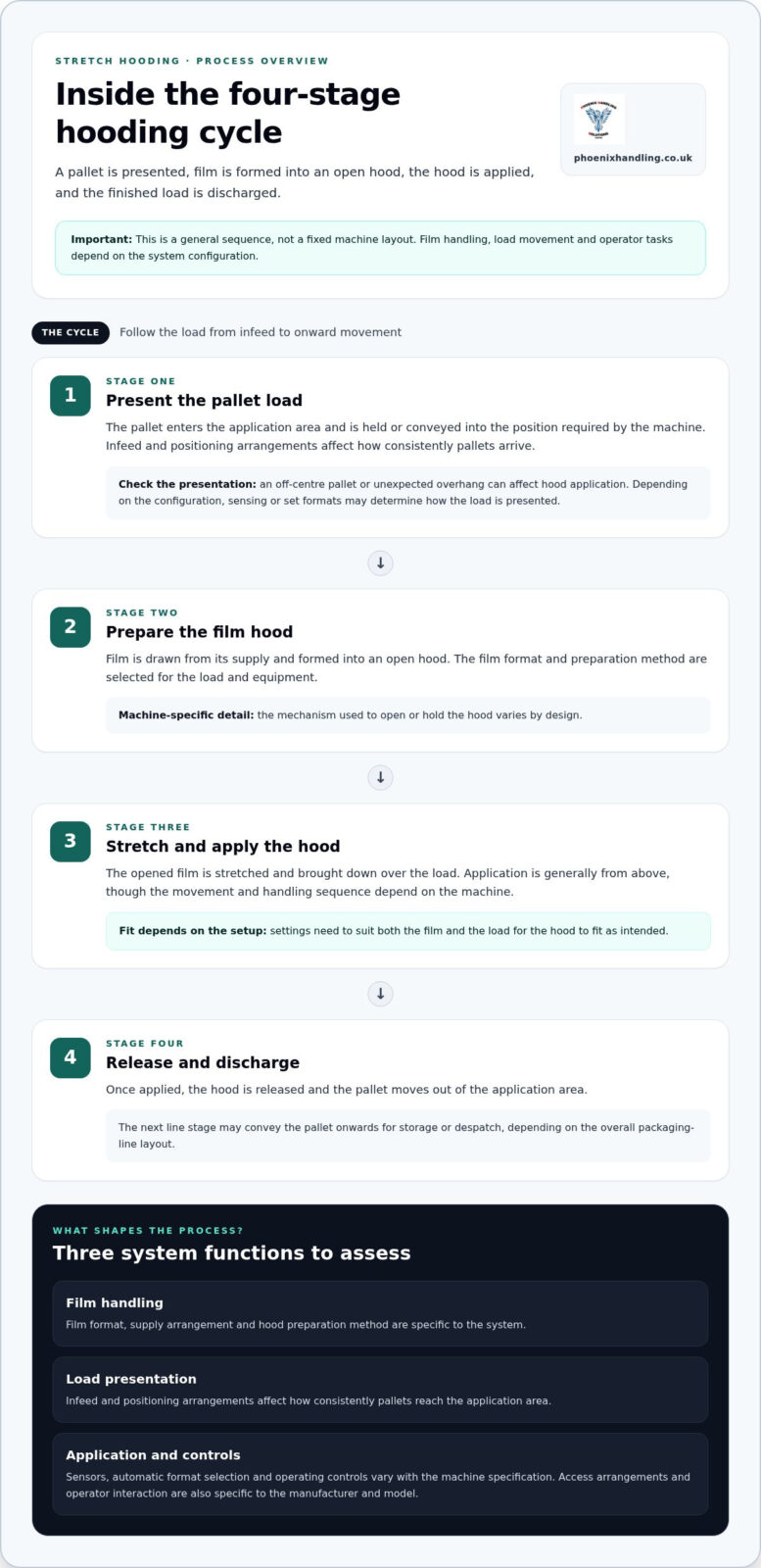
A stretch hood machine follows a sequence that presents the load, prepares the film, applies the hood and releases the finished pallet for onward movement. This is a general process, not a fixed machine layout. Equipment differs in how it handles film, moves the load and controls application, so the precise sequence and operator tasks depend on the system configuration.
What are the main stages in the hooding cycle?
The cycle begins when a palletised load arrives at the infeed. It is positioned for hooding through the line’s conveying arrangement or another specified handling method. Load dimensions and presentation matter: an off-centre pallet or unexpected overhang can affect hood application.
- Load presentation. The pallet enters the application area and is held or conveyed in the position required by the machine. Depending on the configuration, the system may use sensing or set formats to determine how the load is presented.
- Film preparation. Film is drawn from its supply and formed into an open hood. The film format and preparation method are selected for the load and equipment. The mechanism used to open or hold the hood varies by design.
- Hood application. The opened film is stretched and brought down over the load. Application is generally from above, but the movement and handling sequence depend on the machine. Settings need to suit the film and load for the hood to fit as intended.
- Release and discharge. Once applied, the hood is released and the pallet moves out of the application area. The next line stage may convey it onwards for storage or despatch, depending on the overall packaging-line layout.
Process diagram
Film hood opened above load ↓ Application direction
[Film hood] ↓ [Pallet load]
Hood descends over the pallet; completed pallet moves to discharge →
Which machine components affect the process?
Assess the system by function rather than assuming every machine uses the same components. Film handling supplies and opens the material; load presentation positions the pallet; the application mechanism stretches and places the hood. Together, these functions determine how the cycle fits the load and the rest of the line.
- Film handling: The film format, supply arrangement and hood preparation method are specific to the system.
- Load presentation: Infeed and positioning arrangements affect how consistently pallets reach the application area.
- Application and controls: Sensors, automatic format selection and operating controls vary with the machine specification. Access arrangements and operator interaction are also specific to the manufacturer and model.
When reviewing a proposed process, map the pallet’s route into and out of the machine. Note how load formats are identified and where operators need access. These details connect the hooding cycle to line flow and available space. Phoenix Handling Solutions Limited supplies stretch hooders and film, and tailors equipment to product, throughput and floor-space requirements. Explore stretch hooding equipment as part of a wider packaging-line assessment.
Stretch Hood Machine or Another Pallet-Securing Method: What Changes?
Hooding, wrapping and strapping secure pallet loads in different ways. A stretch hood machine applies a film enclosure over the load; a wrapper applies film around it; strapping places bands around selected parts of the load. The method to assess depends on the package required, the load’s shape and stability, and how it will be handled in storage and distribution.
Comparison by application factor
Stretch hooding: Film encloses the top and sides. Assess whether this coverage and the hood format suit the load and its route through handling and storage.
Stretch wrapping: Film is applied around the load. Consider the required wrapping pattern, access to the top and whether the package meets the handling objective. The industrial pallet wrapping machine buying guide covers wrapping equipment in more detail.
Strapping: Bands provide restraint at selected points rather than enclosing the load. Consider where restraint is needed and how it works with the product and pallet.
When should a packaging team compare hooding with stretch wrapping?
Compare methods while defining the package, not just the machine. Start with the coverage required: does the load need film across its top and sides, or is the main objective to apply film around it? Then consider load shape, overhangs, product visibility and the conditions encountered during handling and storage.
For example, if you handle loads with different heights or footprints, consider how each method accommodates those formats within the operating process. Account for how the pallet enters and leaves the packaging area, and whether the finished package suits downstream handling. No method is automatically preferable; its suitability depends on the product and packaging objective.
How does strapping fit alongside stretch hooding?
Strapping and film address different requirements. A strap applies restraint at selected points, while a hood encloses the load. Depending on the packaging specification, these approaches may be considered separately or together. A combined package should have a defined purpose, such as providing targeted restraint as well as a film enclosure, rather than adding material without a clear requirement.
For equipment context, the automatic strapping machine buying guide outlines strapping systems, while the pallet strapping machine guide focuses on how strapping supports load restraint. Apply the same practical questions to each method: what needs securing, what coverage is required, and what handling steps follow packaging?
How to Assess Whether a Stretch Hood Machine Fits Your Operation
Start with the loads and packaging objective, then assess the line and site around them. Specify a stretch hood machine against the full range of products it will process, not just one typical pallet. Collecting consistent information before selecting equipment helps expose constraints such as changing load heights, limited floor space and frequent product changeovers.
Which load and throughput details should be recorded?
Build a load profile using production data and representative pallets. Record minimum and maximum dimensions, heights and weights, and how often formats change. Note whether products are fragile, unstable or sensitive to visibility through the packaging, as these requirements can affect the intended package.
- Load formats: List product types, pallet dimensions, overhangs, irregular shapes and mixed configurations.
- Variation: Capture the smallest and largest loads, plus common variations between those limits.
- Operating pattern: Record current and planned pallet rates, shift patterns, peaks and interruptions.
- Changeovers: Note how often products or pallet formats change, and how much time the line allows for each transition.
- Packaging objective: Describe the restraint, coverage and presentation required for each load type.
Assess throughput against actual production patterns. A headline machine rate alone will not show whether the system can keep pace with varied formats, planned stoppages or uneven demand. Compare the expected operating cycle with the time available at the packaging stage.
What site and integration factors affect specification?
Map the proposed position against the full pallet route, from upstream equipment to the next operation. Include floor area, operator and maintenance access, line direction, and space for infeed and discharge. A layout that fits the machine footprint alone may not account for how pallets and people move around it.
- Line connections: Identify the conveying or handling equipment before and after the hooding point, including any changes in pallet orientation or flow.
- People and access: Outline routine operator tasks, format changes, film replenishment and planned maintenance access.
- Film requirements: Record the film specification relevant to the load and equipment, along with storage and handling conditions.
- Distribution conditions: Describe how packaged pallets are stored, moved and transported, and the packaging objectives for each stage.
Final performance depends on the selected equipment, film specification, load range and operating conditions. Phoenix Handling tailors stretch hooding equipment to product, throughput and available floor space, supporting assessment within the wider packaging line. Discuss your stretch hooding requirements with Phoenix Handling.
How Phoenix Handling Approaches Stretch Hood Machine Requirements
Define a stretch hooding project by considering the product, packaging objectives and line conditions together. Phoenix Handling Solutions Limited supplies stretch hooders and stretch hood film, and tailors equipment around product type, throughput and available floor space. This helps shape the equipment specification around the application instead of assuming a standard arrangement will suit every load or line.
What information helps define a stretch hooding requirement?
A practical project brief starts with representative load data. Record dimensions and weight ranges, product types, pallet formats and how loads vary during normal production. Include the required package outcome, such as intended coverage and restraint, alongside product or handling considerations that affect how the load should be presented.
- Load details: Provide minimum and maximum dimensions, heights, weights and format variation.
- Throughput: Describe current and planned output, shift patterns, production peaks and product-change frequency.
- Packaging objectives: Set out the coverage, load handling, storage and distribution requirements the package must address.
- Film requirements: Include relevant film information and how it relates to the load and intended application.
- Line layout: Map available floor space, line direction, infeed and discharge arrangements, and interfaces with upstream or downstream equipment.
- Operating pattern: Note operator tasks, changeovers, access needs and maintenance planning.
These details connect the load to the actual packaging process. For example, frequent format changes and a constrained installation area may affect the equipment arrangement and how the system fits into the existing line. A clear brief also separates essential requirements from assumptions based on one pallet type or an isolated output figure.
What is the next step in assessing a system?
Organise load and line information before discussing the project. Include examples of typical and less common formats, along with the production pattern they represent. This gives the specification process a realistic basis and helps identify requirements that need to be considered together, including film, throughput, floor space and line interfaces.
Phoenix Handling Solutions Limited supplies packaging and material-handling machinery, including stretch hooders and stretch hood film, as part of a broader equipment and automation range. The selected system should reflect the stated operating conditions. Final performance depends on the equipment, load, film specification and how the line operates.
With the project data assembled, discuss how a suitable system could fit your packaging process. Discuss your stretch hood machine requirements with Phoenix Handling Solutions Limited.
Turn Your Packaging Requirements into a Practical Next Step
Use your assessment to define what the packaging process needs to achieve as production changes, not just how it handles the most common pallet today. A clear specification gives the project discussion a practical starting point and grounds equipment decisions in actual operating conditions. It can also highlight where further load trials or line planning may be useful before selecting a system.
If you are considering a stretch hood machine, bring together your load information, packaging objectives and site layout. Phoenix Handling can discuss how equipment requirements relate to product type, throughput and available floor space, including the role of stretch hood film in the application. This creates a focused conversation about how the packaging process could fit your operation.
Start a packaging-line discussion with Phoenix Handling and take the next step towards a specification suited to your requirements.
Frequently Asked Questions
What is a stretch hood machine?
A stretch hood machine encloses palletised goods with stretched film. For specification, consider more than the nominal pallet footprint: record load overhangs, uneven top profiles and differences between product families. These details can affect hood dimensions and how you assess finished packs. When comparing published output and load ranges, check the stated configuration and conditions rather than treating a figure as applicable to every machine.
How does a stretch hood machine work?
A typical system positions the pallet, prepares a film hood and applies it before the packaged load moves onwards. To check how the cycle fits your operation, map where pallets queue and how the next process receives them. For example, limited accumulation space on a downstream conveyor may affect discharge arrangements. The sequence and automation level vary by machine, so assess the complete cycle against actual line conditions.
Can a stretch hood machine handle different pallet sizes?
Some systems accommodate a range of load sizes, while others are configured for more consistent formats. Compile the smallest and largest pallet loads, including height, overhang and changes in product arrangement. A range quoted for one machine does not establish what another can handle. Include film specification in the assessment, as load dimensions and film suitability need to be considered together.
Does stretch hooding use heat?
Do not assume every system uses the same process. Check the selected equipment’s process and energy requirements against its relevant specifications. This keeps comparisons accurate, particularly when utilities or operating conditions are part of your site planning criteria.
Can stretch hood film be printed?
Printed film may suit some applications, but suitability depends on the machine and film specification. If printed packaging is required, include the artwork and presentation objective in the project brief alongside load formats. Consider the equipment and film together to establish whether they suit the intended application.
How many pallets per hour can a stretch hood machine process?
There is no single output figure that applies to every stretch hood machine. Published rates refer to particular models and conditions, while actual site performance can depend on load height, film specification, format changes and line flow. Compare the expected cycle with your operating pattern, including production peaks and interruptions. Distinguish a stated maximum rate from the output needed consistently across the full range of loads.
Can a stretch hood machine be added to an existing packaging line?
Integration depends on the available layout and how pallets move through the line. Before planning a position, identify the infeed and discharge interfaces, line direction, surrounding equipment and access space. For example, a change in pallet orientation between processes may affect the transfer arrangement. These details help establish how a hooding system can fit into the existing sequence rather than assessing the machine in isolation.
Is stretch hooding suitable for outdoor storage?
A hood may provide an outer covering, but suitability for outdoor storage depends on the film, application and required package specification. Define the conditions the pallet will encounter, including the duration and type of exposure, as well as how it will be handled before and after storage. Do not assume that a film hood provides a particular level of water or environmental protection unless the specification supports that requirement.