
Pallet Conveyor Systems
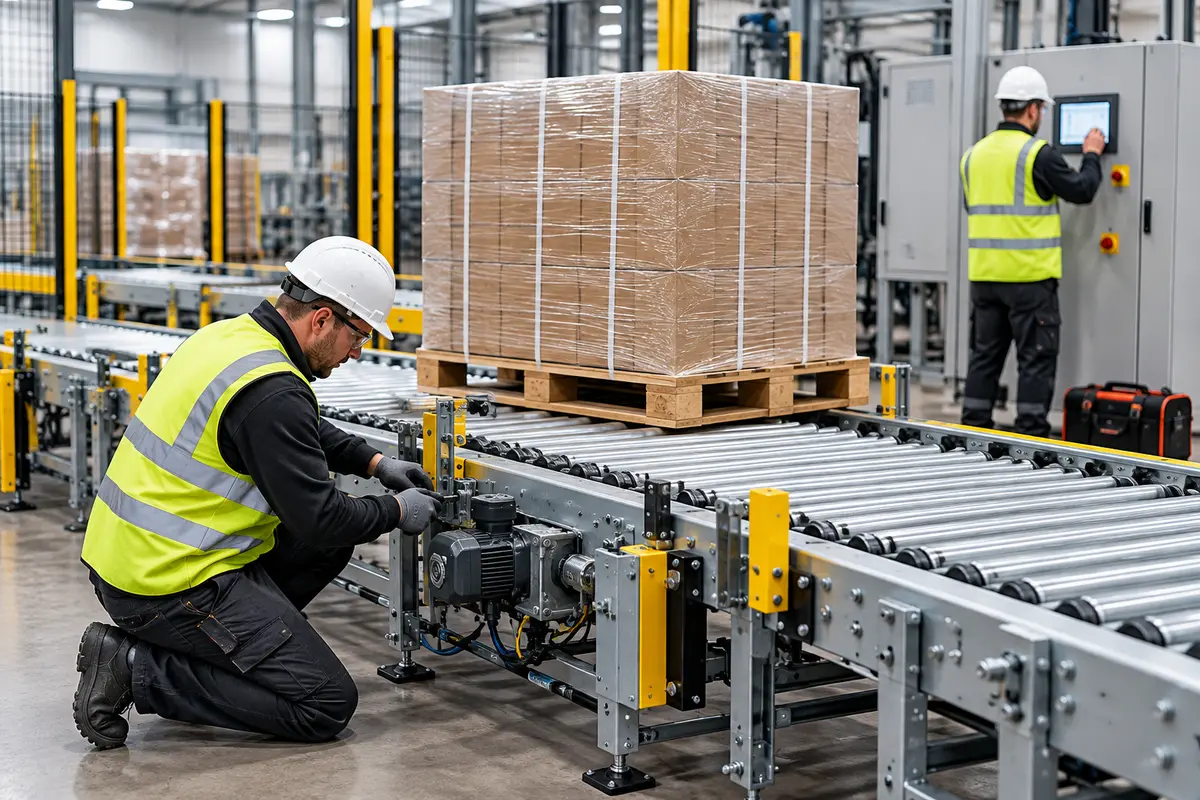
Pallet handling conveyors move loaded and empty pallets between production, packaging and automated handling processes.
Systems can be configured using roller conveyors, chain conveyors, transfer units, turntables and other pallet handling equipment, either as standalone conveyor sections or integrated with palletisers, de-palletisers, wrapping machines, strapping machines and automated storage systems.
The conveyor arrangement is designed around the pallet, load, required throughput and how each pallet needs to move between processes.
Roller Pallet Conveyors
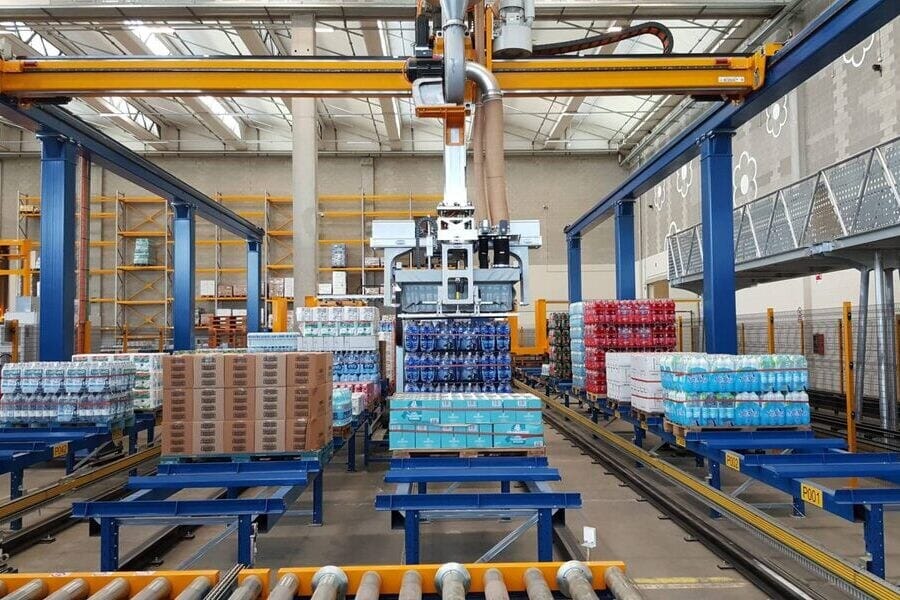
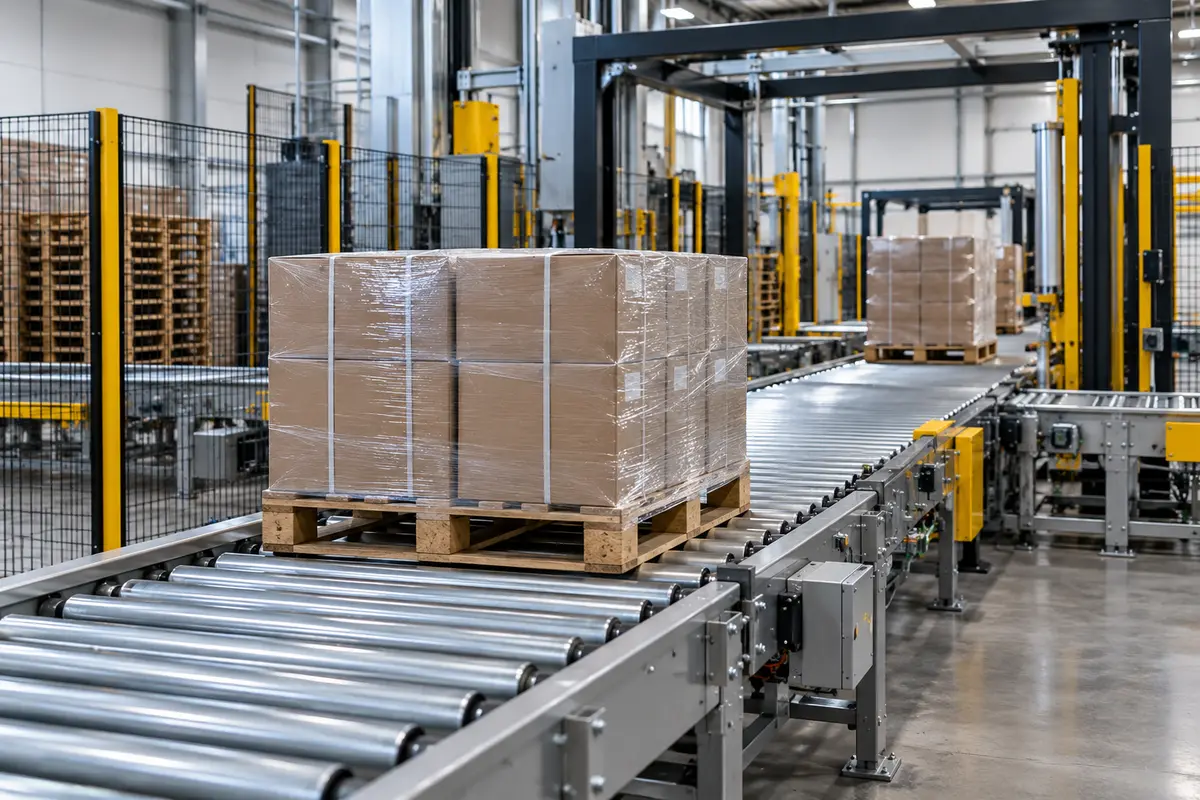
Powered roller conveyors are used to transport pallets between different stages of a production or packaging line. They can be installed as individual conveyor sections or combined with other pallet handling equipment as part of a larger automated system.
Roller spacing, conveyor width and direction of travel are specified around the pallet being handled, ensuring the pallet is correctly supported as it moves through the system.
Roller conveyors can also be combined with transfer units, turntables and positioning equipment where pallets need to change direction or move between different sections of a line.
Chain Pallet Conveyors
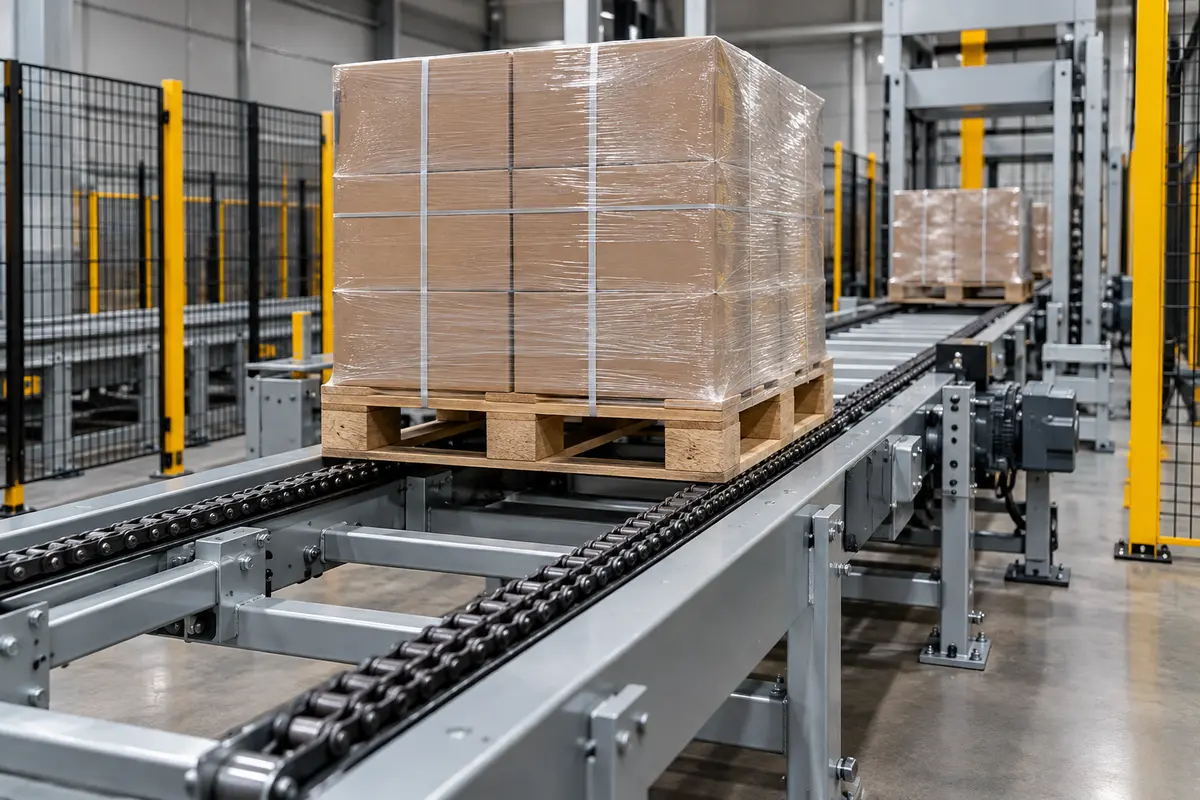
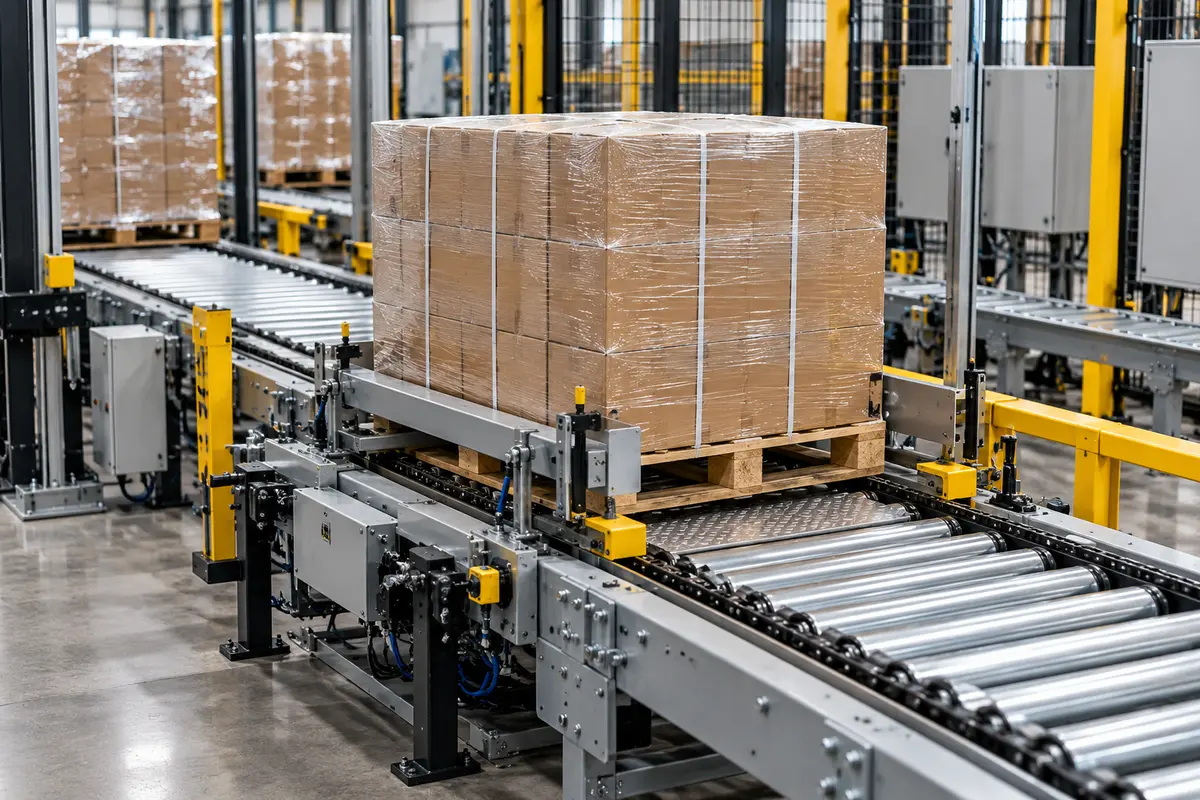
Chain pallet conveyors transport pallets on parallel strands of driven chain rather than across a series of rollers. They can be used where the pallet construction, support points or direction of travel makes chain transport more suitable.
The number and position of the chain strands are specified around the pallet being handled and the support required as it moves through the system.
Chain conveyors can also be combined with roller conveyors to create 90° pallet transfers, allowing pallets to move between conveyor sections running in different directions.
Pallet Transfers, Turntables & Shuttles
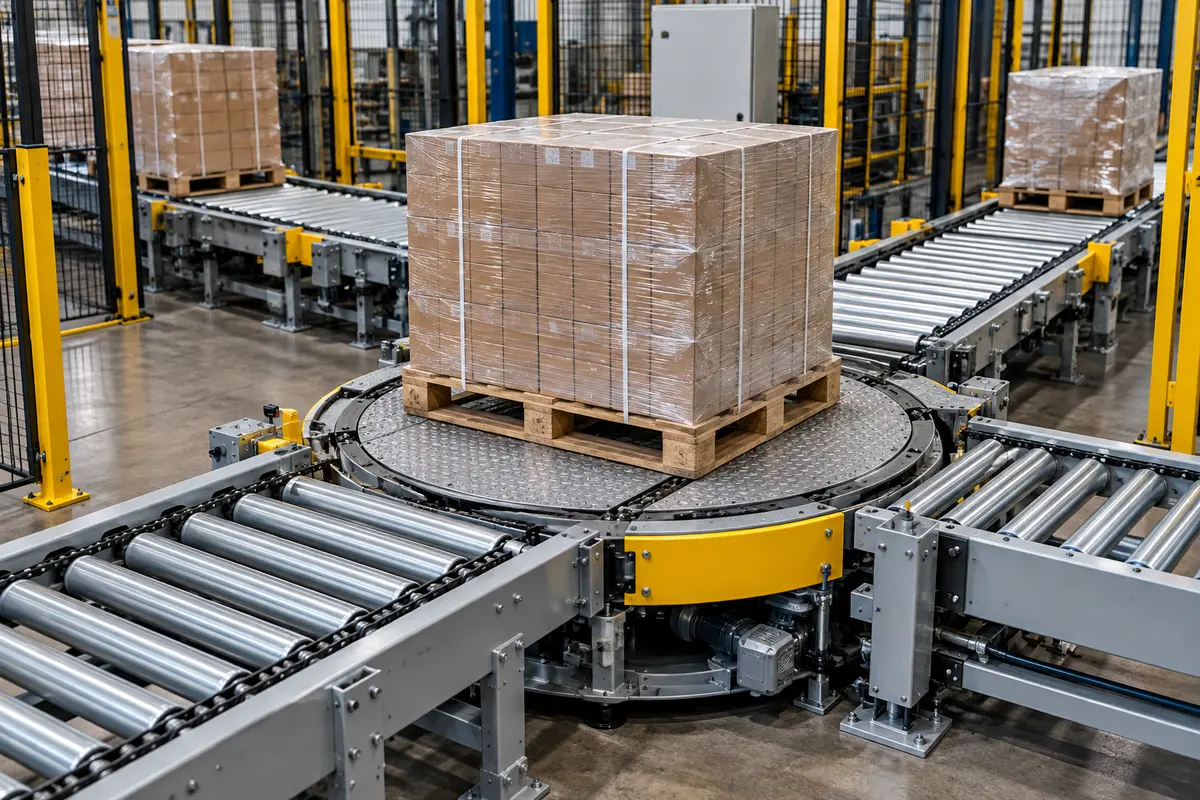
Pallet handling systems can incorporate transfer equipment where pallets need to change direction, orientation or move between different conveyor lines.
90° chain and roller transfer units move pallets between conveyors running in different directions, without necessarily changing the orientation of the pallet itself.
Turntables and rotating platforms rotate the pallet where its orientation needs to change before the next stage of the process.
Pallet shuttles can transfer pallets between separate conveyor positions as part of a larger automated handling system.
The equipment used depends on the required pallet route, available floor space and the machinery the conveyor system needs to connect with.
Pallet Positioning & Accumulation
Automated equipment often requires a pallet to arrive in the correct position before the next machine cycle can begin. Pallet centring and positioning equipment can be incorporated where this is required.
Pallet accumulation can also be built into the conveyor system where loads need to wait between processes. This is particularly relevant where connected machines operate at different cycle times.
The conveyor layout and controls can then manage pallet movement between each stage of the line while providing the required accumulation between machines.
Pallet Conveyors for Automated Production Lines
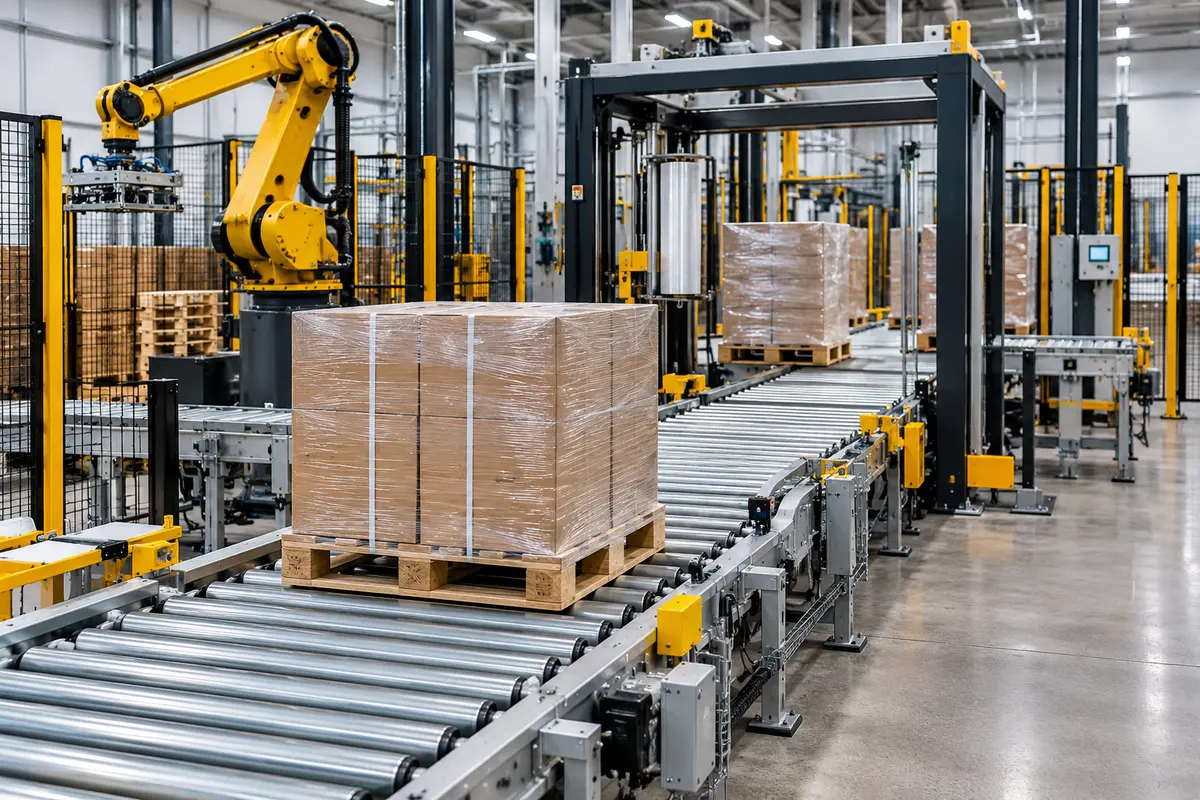
Pallet conveyors can connect individual machines and processes as part of a complete automated handling system.
Conveyor systems can be integrated with palletisers, robotic palletising systems, de-palletisers, strapping machines, pallet wrappers, stretch hooding equipment and automated storage systems.
The conveyor arrangement is configured around the required production sequence, including how the pallet enters and leaves each machine, where it needs to stop and how it transfers between processes.
Pallet Conveyor Controls & Integration
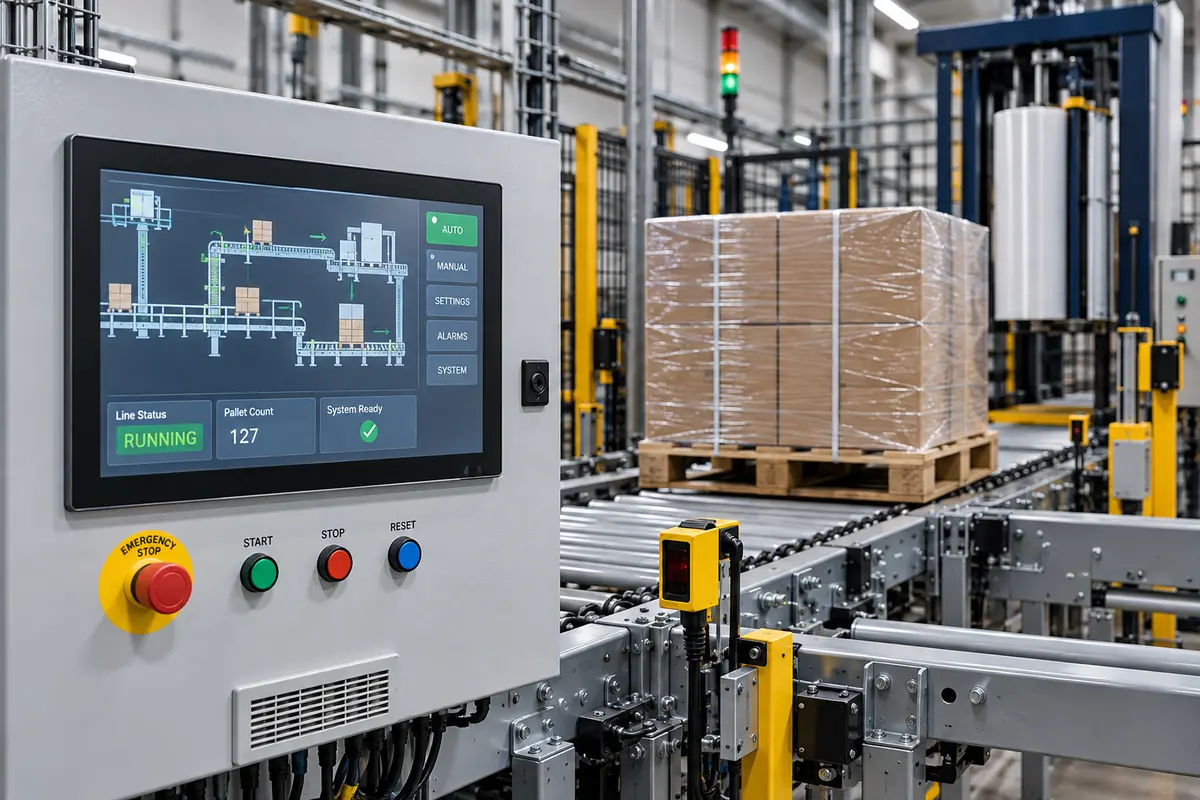
The conveyor controls coordinate pallet movement with the machinery connected to the system. Pallets can be detected and controlled as they move between conveyor sections and through the different stages of the line.
Where conveyors connect with palletisers, wrappers, strapping machines or other automated equipment, signals are exchanged between the machines so pallet movement follows the required operating sequence.
For conveyors being added to an existing line, the current controls and surrounding equipment can be assessed as part of the integration.
Pallet Conveyor Systems Designed Around Your Operation
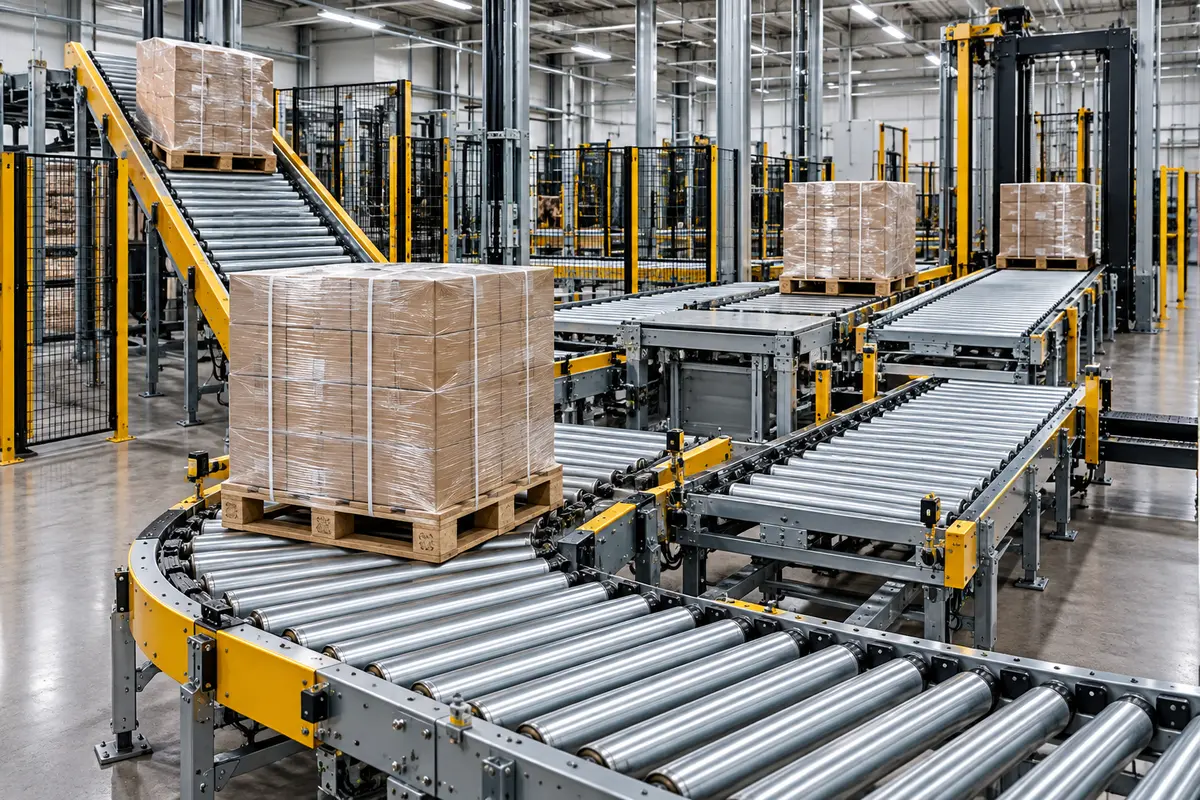
Pallet conveyor systems can be configured around the pallet type, load dimensions and weight, required throughput and available production space.
Roller and chain conveyors can be combined with transfers, turntables, shuttles and positioning equipment to create the required pallet route. Conveyor heights, changes in direction and accumulation can also be incorporated into the system layout.
Installation, Commissioning & Support
Phoenix Handling Solutions provides installation and commissioning for pallet conveyor systems throughout the UK and Ireland.
Systems can be installed as part of a new automated handling line or integrated with existing conveyors, machinery and controls.
Ongoing support includes servicing, preventative maintenance, technical support and spare parts for installed equipment.
Frequently Asked Questions
Yes. The existing conveyor layout, heights, available space, surrounding machinery and controls can be assessed to determine how additional pallet handling equipment can be incorporated.
A system can be designed around a defined range of pallet sizes. The pallet dimensions, construction, load weight and direction of travel need to be established so the conveyor and transfer equipment provides the required support.
A transfer moves a pallet from one conveyor line to another. Where the orientation of the pallet itself needs to change, a turntable or rotating platform can be incorporated into the system.
Yes. Where accumulation is required, the conveyor layout and controls can manage pallet flow between processes. The amount of accumulation required will depend on machine cycle times, the production sequence and available space.
Yes. Conveyor routes can be configured around the available production space and the position of existing machinery. Changes in direction, transfer points, conveyor heights and connections with other equipment can be considered as part of the system layout.
Useful information includes the pallet dimensions and construction, loaded weight, required throughput, direction of travel, conveyor height, transfer requirements, available space and the equipment the conveyor needs to connect with.